20 Things to Do in Albenga and the Surrounding Area: The Definitive Guide
What to do in Albenga? From the medieval cathedral to Gallinara Island, from Pigato DOC wine to the Toirano Caves: 20 authentic experiences as told by locals.
There are places you visit, and places you experience. For us, Albenga falls into the second category: a town where every alleyway tells a story spanning two thousand years, where the sea is just a few minutes’ walk away, and the inland area hides medieval villages that are almost entirely intact.
In this guide, we’ve compiled 20 things to do in Albenga and the surrounding area, designed for those who want to go beyond the postcard view. It’s not just a list: it’s what we recommend to our guests when they ask us, “What should we see today?” There are the must-see attractions of the historic center, boat trips to Gallinara Island, the flavors of Pigato wine and purple asparagus, and a few hidden corners we particularly love.
Make yourselves comfortable: our Albenga starts here.
1. The Medieval Historic Center: A Walk Through Time
The historic center of Albenga is one of the best-preserved in Liguria and deserves at least half a day of exploration on foot. Cobbled alleys, noble palaces, artisan shops, and above all, the medieval towers rising above the rooftops. We recommend starting at Piazza San Michele, the religious and civic heart of the city, and from there, let your instincts guide you. There’s no rush: in Albenga, you walk slowly.
The urban layout still follows the Roman plan of the Albingaunum of the Ingauni Ligurians, with the decumanus and cardo clearly recognizable. It is a living historic center, not an open-air museum: you’ll find shops, cafés, and locals.
2. The Medieval Towers: The City of a Hundred Towers
Albenga is known as "the city of a hundred towers": an evocative name that speaks to its medieval past, even though the actual number is much smaller. Today, a dozen remain visible, belonging to the noble families who built them between the 12th and 14th centuries as symbols of prestige and power. Among the most striking are the Torre Cazzulini, the Torre della Paciotta, and the Torre Civica (dell’Orologio). Look up as you walk: they’re everywhere, and each tower tells a different story.
The best time to photograph them is in the late afternoon, when the golden light illuminates the stone and brick.
3. Roman Naval Museum: The Largest Shipwreck in the Mediterranean
If we had to recommend just one museum in Albenga, it would be this one. The Roman Naval Museum, housed in Palazzo Peloso Cepolla in the heart of the historic center, preserves artifacts recovered from the wreck of a 1st-century BC Roman ship that sank off the coast of Albenga.
This is no ordinary wreck: with a cargo capacity of over 450 tons, it remains one of the largest Roman cargo ship wrecks ever discovered in the Mediterranean. Recovered starting in 1950 using the ship "Artiglio" during what was the first systematic underwater archaeological campaign in Italian history, it yielded over a hundred wine amphorae, pottery, fishing gear, and game pieces. The amphorae are displayed in a reconstruction of the ship’s “belly,” arranged just as they were two thousand years ago. Must-see. For updated hours and tickets, we recommend consulting the official website of the Municipality of Albenga.
4. The Early Christian Baptistery: the most important in Liguria
Just a short walk from the Cathedral, the Albenga Baptistery is considered the most important early Christian monument in all of Liguria and among the most significant in Italy. Built between the second half of the 5th century and the first half of the 6th century, it features a decagonal exterior plan surmounted by an octagonal drum, an architectural solution of rare elegance.
Inside, the original baptismal font where the rite of immersion was performed and—above all—the splendid cobalt-blue starry ceiling mosaic, dating from the first half of the 6th century: at its center is the monogram of Christ surrounded by twelve white doves, symbolizing the Apostles. It is one of those places that leaves you speechless, especially in the silence of the early morning. The entrance is part of the tour of the Diocesan Museum.
5. Gallinara Island: the nature reserve seen from the sea
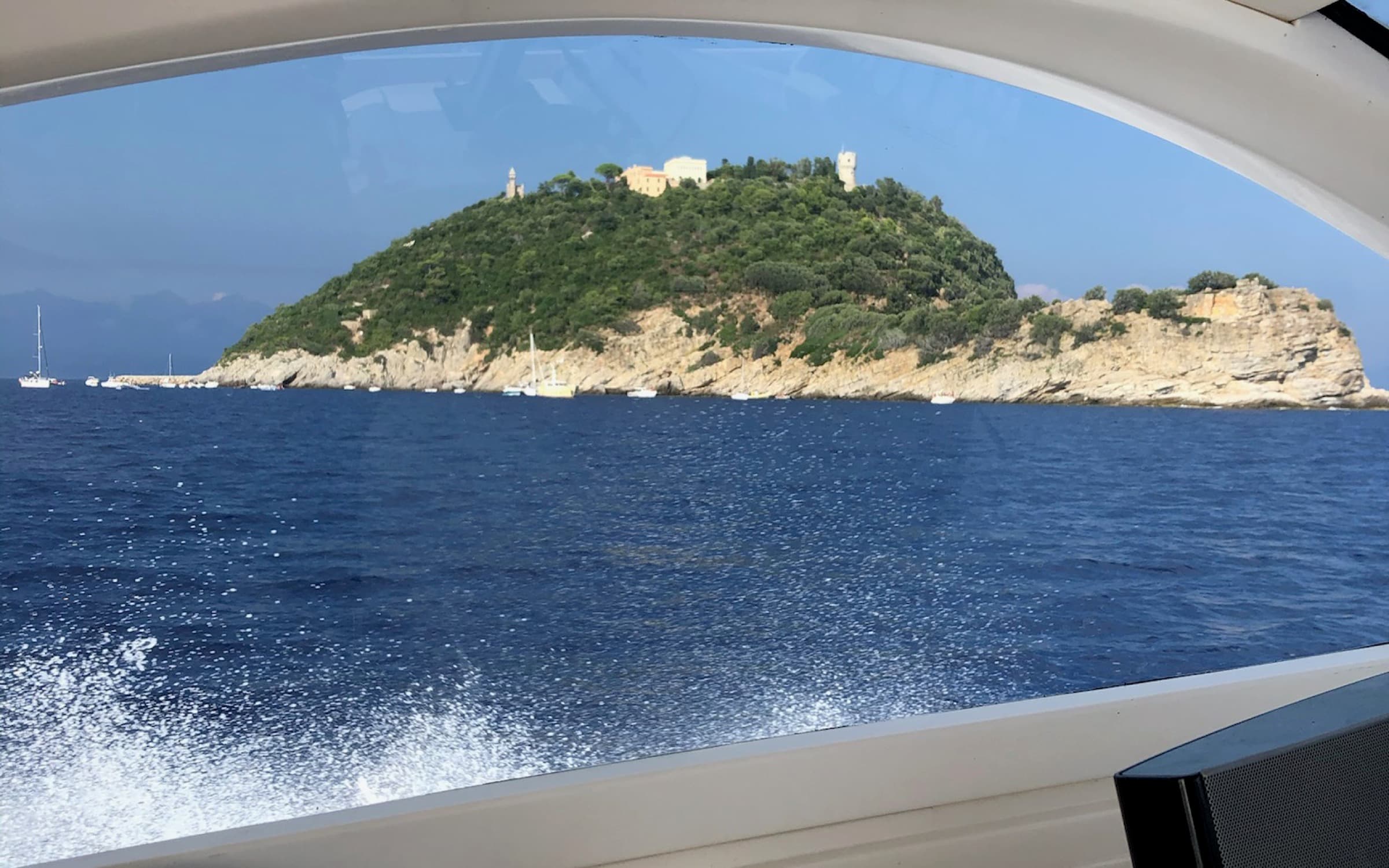
Just over a kilometer from the coast, Gallinara Island is the landscape our guests remember most. A Regional Nature Reserve since 1989, it is closed to the public to protect one of the largest nesting colonies of herring gulls in the Ligurian Sea, but it can be viewed up close by boat.
Excursions depart mainly from the ports of Alassio, Laigueglia, and Loano (10–20 minutes from Albenga) and last about an hour and a half. In the summer, there is almost always a snorkeling stop in the crystal-clear waters around the island, where you can swim over Posidonia meadows and see schools of white seabream. The island takes its name from the wild hens that once inhabited it and served as a refuge for Saint Martin of Tours in the late 4th century. For centuries, it was home to a Benedictine monastery, traces of which still remain.
Our tip: book the sunset tour. Watching Gallinara glow pink as the sun sets behind Capo Mele is an experience you’ll never forget.
6. The beaches of Albenga: 900 meters from the center
Albenga has about 4 kilometers of sandy coastline, a rarity in Liguria, which is mostly made up of gravel and rocks. From our beachfront apartments, it’s just a 900-meter walk—enough time for a stroll in your bathrobe without even breaking a sweat. The coastline is divided between public beaches and equipped beach clubs, with shallow waters and calm seas, perfect for families with children.
The most popular areas are Lido Beach (south of the Centa River, closer to the center) and Saraceni Beach (more secluded, toward the border with Ceriale). We recommend bringing water shoes for the pebbles along the shoreline, especially in the less developed areas.
7. The Albenga Plain: Liguria’s Garden
The Albenga Plain is a marvelous geographical anomaly: a vast flat area between the mountains and the sea, unique on the Riviera di Ponente. This is where much of Liguria’s high-quality produce is grown—oxheart tomatoes, trombetta zucchini, spiny artichokes, peaches, and above all, Albenga purple asparagus.
The latter deserves a special mention: it is a variety unique in the world, with 40 chromosomes instead of the 20 found in other varieties, making it impossible to hybridize. It has been a Slow Food Presidium since 2000 (it is not a DOP, as is sometimes mistakenly stated), has a thick stem and an intense violet color, and on the palate is tender, almost buttery, and free of fibers. The harvest traditionally runs from St. Joseph’s Day (March 19) to St. John’s Day (June 24): if you happen to be in Albenga in the spring, don’t miss it.
8. The Saturday Market in Piazza del Popolo
The weekly Saturday morning market in Albenga is an institution. It takes place in Piazza del Popolo and the surrounding streets, and it’s the best time to see the city in its most authentic form: farmers from the plains arriving with crates of freshly harvested vegetables, cheeses from the hinterland, Taggiasca olives, fish, and stalls selling fabrics and clothing.
It’s also the best way to stock up your pantry if you’re staying in an apartment: we do it every Saturday. We recommend going early, around 9 a.m., when the stalls are full and there’s still plenty of room to move around comfortably.
9. Tasting of Pigato DOC and Vermentino
Pigato is our white wine. Grown in the hills of the Albenga hinterland, it is one of the flagship varieties of the DOC Riviera Ligure di Ponente, with a particular aptitude for the sub-regions of Albenga, Finale, and Ortovero. The Albenga plain has historically been identified as the area best suited for this grape variety, where it expresses its highest quality.
In the glass, it is straw-yellow with golden hues, offering aromas of Mediterranean scrub, aromatic herbs (thyme, rosemary), citrus, and white flowers. On the palate, it is savory and mineral, with a slightly salty finish that hints at the proximity of the sea. Alongside Pigato, don’t forget Vermentino, which is fresh and more citrusy.
Many wineries in the Albenga hinterland organize tours and tastings by reservation: we recommend calling a few days in advance to ensure availability.
10. Pesto Cooking Class Using a Mortar
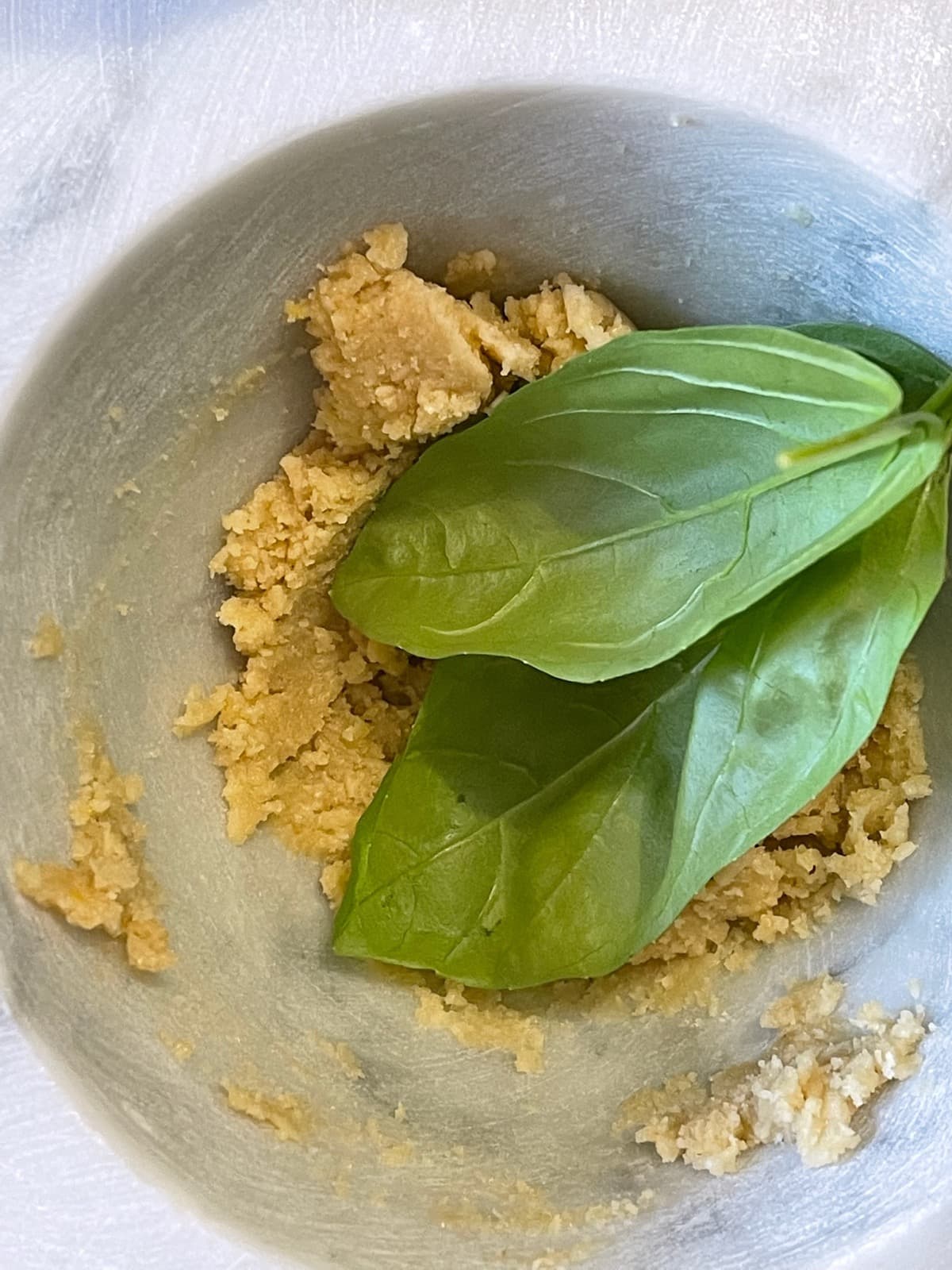
Ligurian pesto is much more than a sauce: it’s a ritual. The original recipe calls for a marble mortar, a wooden pestle, DOP basil, pine nuts, Vessalico garlic, Parmigiano, Pecorino, coarse salt, and Taggiasco extra virgin olive oil. Made by hand, it has a flavor that’s worlds apart from the blender version.
Several local agritourism farms and cooking schools organize pesto-making classes using a mortar and pestle, often combined with the preparation of fresh trofie or trenette pasta. It’s the perfect experience for a rainy day or for those who want to take home a tangible culinary souvenir. Feel free to ask us for recommendations: we have a few trusted spots.
11. The Ponente Bike Path: Albenga-Ceriale-Borghetto-Loano
One of Albenga’s most delightful surprises is the bike path that runs along the coast southward, connecting Albenga to Ceriale, Borghetto Santo Spirito, and Loano. It’s almost entirely flat, suitable for families and casual cyclists, and offers continuous views of the sea and Gallinara Island as you ride.
The entire route to Loano takes about an hour at a leisurely pace, with plenty of opportunities to stop for a swim, an ice cream, or an aperitif on the beach. Several rental shops in downtown Albenga offer both regular bicycles and e-bikes: we recommend the e-bike if you want to extend your ride into the inland areas.
12. Castles in the Area: Conscente, Cisano, Arnasco
The Albenga hinterland is dotted with medieval castles and watchtowers, many of which can still be visited or admired from the outside during excursions. The Castle of Conscente (a hamlet of Cisano sul Neva) is one of the best-preserved in the area, while the ruins of watchtowers between Arnasco and Ranzo tell the story of the defensive system that once protected the Arroscia Valley from raids.
These are perfect destinations for a morning drive or bike ride, especially if you love history and panoramic views from above. Many of these sites do not have set visiting hours: we recommend them as stops along a broader itinerary in the hinterland.
13. Zuccarello: one of Italy’s most beautiful villages
About 10 kilometers from the center of Albenga, in the Val Neva, lies Zuccarello, listed among the prestigious Most Beautiful Villages of Italy. Founded on April 4, 1248, by the Del Carretto family, it retains its medieval atmosphere intact: a long stone portico runs through the entire village, the Church of San Bartolomeo houses a 15th-century pipe organ, and the Romanesque bridge over the Neva stream is one of the most photographed views in Liguria.
Just above the village, the ruins of the castle offer a spectacular view of the valley. You can explore Zuccarello in a couple of hours, and it’s perfect to combine with lunch at a local trattoria: the cuisine of the inland region here is down-to-earth, with generous portions and prices that are still reasonable.
On the road between Albenga and Zuccarello, Colletta di Castelbianco is also worth a stop: a tiny medieval stone village perched on a rocky outcrop in the Pennavaire Valley, renovated in the 1990s as a "telematic village"—one of the world's first examples of architectural restoration integrated with technology. Today it is a place frozen in time, with just a few dozen residents, narrow alleys of polished stone, and a silence you won’t find anywhere else on the Riviera. It takes twenty minutes to reach from Albenga and an hour to explore, but the landscape alone is worth the trip.
14. Toirano and its caves: a journey into prehistory
About 20 minutes by car from Albenga lie the Toirano Caves, one of Italy’s most spectacular karst complexes and a site of international prehistoric importance. The guided tour lasts about 70 minutes and winds along a 1,300-meter route at a constant temperature of 16°C (bring a sweatshirt even in August!).
Inside, you’ll find limestone formations of rare beauty, stalactites, and stalagmites, but above all the famous Homo sapiens footprints dating back about 12,000 years, some of the most important prehistoric artifacts in Europe. We strongly recommend booking in advance, especially during peak season: check the official website of the Toirano Caves for updated schedules and tickets. Closed-toe shoes are required.
15. Alassio: the Muretto, the Budello, and the Baci
Just 10 minutes from Albenga, Alassio is the social gem of the Riviera di Ponente. Its beating heart is the Budello, the affectionate name for Via XX Settembre: a narrow pedestrian street running parallel to the sea, nearly two kilometers long, that cuts through the entire town center. It’s the street for shopping and strolling, lined with fashion boutiques, pastry shops, and historic cafés.
Just a short walk from the Budello is the famous Muretto di Alassio, created in 1953 based on an idea by painter Mario Berrino: a small wall decorated with tiles autographed by actors, athletes, musicians, and famous figures who have visited the town. And while you’re there, you can’t leave without trying the Baci di Alassio, traditional chocolate and hazelnut cookies that have been made here since 1919.
For fans of graphic design and visual culture, an unexpected and fascinating stop is the Galleria L'Image: a shop-gallery specializing in original 20th-century posters and advertising prints. The selection is vast—movie posters, vintage advertisements, travel posters, graphic art—all authentic. It’s one of those places where you walk in out of curiosity and walk out with a piece of history under your arm.
16. Laigueglia: the authentic seaside village
Just a stone’s throw from Alassio, yet with a very different character, Laigueglia is a seaside village that has managed to preserve its soul. No glitz, no crowds: just pastel-colored houses overlooking the sea, colorful boats beached on the sand, the Church of San Matteo with its two majolica domes, and a seaside promenade that ranks among the most charming in Liguria.
It’s the perfect spot for a seafood dinner at sunset, with your feet practically in the sand. We recommend walking there from Alassio along the coastal path: it takes about 40 minutes, and you’ll have a constant view of Gallinara Island.
17. Finale Ligure: outdoor activities, climbing, and beaches
About 30 minutes east, Finale Ligure is another must-see destination, especially if you love the outdoors. It is one of the European capitals of sport climbing: the area boasts over 4,000 equipped routes on perfect limestone, with famous sectors such as Monte Sordo, Rocca di Corno, and Rocca di Perti. Even those who don’t climb can enjoy the hiking trails, enduro MTB (Finale is also a hub for this), and the medieval village of Finalborgo, one of the most beautiful in Liguria.
In between, the beaches of Varigotti, with their pastel-colored houses lining the coast, are worth a quick stop just for a photo. A single day isn’t enough: Finale is best savored in small doses.
18. Villanova d'Albenga: the fortified medieval village
Just 5 kilometers from Albenga, Villanova d'Albenga is a small gem often overlooked by mass tourism. Founded by the Municipality of Albenga between 1250 and 1288 as a fortified village to defend the territory, it retains a polygonal layout bounded by ten square-based towers still visible today and sections of the original walls.
You can walk from one end to the other in just a few minutes along Via Garibaldi, the central thoroughfare about 150 meters long, with the characteristic medieval well halfway along the route. Villanova is also known as "Paese delle Viole": the flower appears in the municipal coat of arms, and its cultivation was historically one of the village’s main activities. Perfect for a half-hour stroll followed by coffee in the square.
19. Local festivals and fairs: the calendar to mark
In Albenga and the surrounding area, tradition is alive and well and celebrated all year round, but summer is the highlight. Among the most cherished events are the Palio Storico di Albenga (a medieval reenactment with flag-wavers and costumed processions), Albenga Summer (a lineup of concerts, outdoor movies, and performances in the square), and the numerous festivals dedicated to local specialties: purple asparagus in late spring, seafood in the coastal villages, and chestnuts and new wine in the fall inland.
We also recommend the Polentonissimo di Castelvecchio di Rocca Barbena, one of the oldest festivals in the province of Savona, where a giant pot of polenta is prepared in the village square. We suggest checking the updated events calendar on the municipality’s website before you leave: our guests often discover unmissable events that weren’t on the agenda.
20. Sunset at Capo Mele
We’ll wrap up with what is, for us, the most beautiful sunset on the Riviera di Ponente. Capo Mele, the promontory between Andora and Laigueglia (about 15 minutes from Albenga), offers an unobstructed view to the west that takes in Gallinara Island, the coastline curving toward Alassio, and, on clear days, the Maritime Alps on the horizon.
Head up just before sunset, bring a bottle of Pigato (if you’re not driving!), and enjoy the show. It’s free, it’s quiet, and it’s one of those moments that explains better than a thousand words why we chose to live in this part of Liguria.
This Is Our Albenga
Our Albenga is a small town packed with things to do, surrounded by an area just as worth exploring as the historic center. In a week, you can see all 20 spots in this guide without rushing, and if you have less time, just pick: the historic center + Gallinara Island + a trip inland, and you’ll leave already wanting to come back.
We at LargoDoria are here year-round, between ViaArchivolto and ViaGenova, and we love sharing Albenga with our guests with the calm perspective of those who live here. If you have questions, are curious about something, or want personalized recommendations for your stay—a restaurant, a winery, a specific excursion—feel free to write to us before your arrival: we’d be happy to help.
See you soon, in the heart of Albenga.