The Best Restaurants in Albenga: A Local Guide to Great Dining
Where to eat in Albenga, according to the locals: trattorias in the historic center, seafood restaurants, focaccia shops, Pigato DOC, and purple asparagus.
In Albenga, people don’t eat the way they do elsewhere in Italy. Western Liguria boasts a distinctive cuisine, built around a few ingredients prepared with meticulous care: basil pounded into pesto in a mortar, chickpea flour left to rest all night before being poured into a copper pan, bluefish caught at dawn off Gallinara Island, and purple asparagus that emerges every spring from the sandy soil of the Albenga Plain only to disappear until the following year. It is a cuisine that is hard to come by, but when you encounter it in the right place, it stays with you.
Living in Albenga’s historic center, among the medieval towers and stone alleyways, means having everything within walking distance. You step out of your house, turn the corner, and find yourself in front of a bakery that has been making focaccia the same way for seventy years, or a tavern tucked away in an alleyway that smells of ciuppin. Here, nothing is “for tourists” and nothing is truly a “secret”: it’s simply what the people of Albenga eat every day, and that’s the beauty of it.
In this guide, you won’t find TripAdvisor rankings or a list of “must-try” spots. We’ll tell you where we eat, where we send friends who come to visit us, and where we recommend you go when you’re staying at LargoDoria. From the marble counters of historic trattorias to the Pigato DOC wineries in the hills behind the city, here is our Albenga of taste.
1. Albenga’s cuisine: what to expect
The first thing to understand is that in Albenga, as throughout Liguria, the cuisine changes drastically between the coast and the inland areas, often within just a few kilometers. By the sea, anchovies, sardines, sea bass, red mullet, cuttlefish, and the famous ciuppin—a humble fish soup that originated when fishermen kept the less prized catch for themselves—dominate the menu. Heading up toward the Val d'Arroscia and the Neva Valley, however, the stars of the show change: Ligurian-style rabbit, wild boar, mushrooms, wild herbs, savory pies, and panissa—fried chickpea flour cubes that are an appetizer you absolutely must try.
Among the dishes you must try while you’re here:
- Trofie al pesto, preferably with green beans and potatoes cooked in the same water as the pasta, as per Genoese tradition.
- Farinata, the undisputed queen: chickpea flour, water, oil, and salt, baked in a wood-fired oven in a sizzling copper pan. In Albenga, some have been making it this way for nearly seventy years.
- Focaccia with olive oil, to be eaten hot straight out of the oven, perhaps dipped in cappuccino for breakfast (yes, we really do that).
- Pansotti with walnut sauce, the quintessential Ligurian stuffed pasta: large half-moon ravioli filled with a mixture of wild herbs (the so-called "preboggion"), ricotta, and Parmesan, topped with a creamy sauce of walnuts, garlic, breadcrumbs, and oil. It’s a dish found only here, and from the very first bite, you’ll understand why Liguria is more than just pesto.
- Albenga purple asparagus, a Slow Food Presidium, with its 40 chromosomes (all other asparagus varieties have 20), making it unique in the world. It is harvested by hand from March 19 (St. Joseph’s Day) to June 24 (St. John’s Day): if you’re here in the spring, ask for it everywhere.
- Ciuppin, salt-baked sea bass, mixed fried seafood, stuffed anchovies: the seafood repertoire.
- Pigato DOC and Vermentino from the Riviera Ligure di Ponente, the mineral-rich and savory whites that are the soundtrack to every meal.
There is also a lesser-known side: that of Provençal influences (we’re an hour from the French Riviera) and Piedmontese ones (the Val d’Arroscia looks toward Cuneo). You’ll find them in certain rabbit ragùs, in the generous use of Taggiasca olives, and in some cheese platters that blend Ligurian Robiole and alpine Tome.
2. Ligurian cuisine: our recommendations
If you ask us for just one recommendation, the first place we’ll mention is I Matetti in Alassio (a ten-minute drive from Albenga). It’s the restaurant we recommend to all our guests: Ligurian cuisine featuring both seafood and meat dishes, prepared with genuine care using local ingredients—dishes that never disappoint. An important tip: book ahead, especially during peak season—it’s very popular, and in the summer, without a reservation, you risk not finding a seat.
In Albenga, our go-to spot is Il Candidato, in the historic center. Well-executed local cuisine, generous portions, and a no-frills atmosphere. It’s where we go ourselves when we want an authentic Ligurian dinner without overthinking it. Price range: €-€€, reservations recommended in the evening.
Da Puppo (Via Torlaro 20) is the go-to spot for farinata par excellence. Open since 1956, it seats just fifty, doesn’t take reservations, and the wood-fired oven for the farinata is always lit. The Ghigliazza family took over from the Puppo sisters in 2003 without changing a thing. Order the classic farinata, a platter of fried panissa, perhaps a vegetable soup or trofie with pesto, and a small glass of white wine. Price range: €, rustic atmosphere—you’ll feel like you’ve stepped back into the 1970s. It’s just a few minutes’ walk from Largo Doria.
Hosteria Sutt Ca is another downtown trattoria, a stone’s throw from the main attractions, serving home-style Ligurian cuisine featuring both seafood and meat dishes at fair prices (€–€€ range). Home-cooked dishes, locally sourced ingredients, and a quiet, well-kept atmosphere.
What to order practically anywhere: trofie with pesto, farinata if available, purple asparagus in season (April–June), stuffed anchovies, panissa, and Ligurian-style rabbit if it’s on the menu.
3. Seafood Restaurants
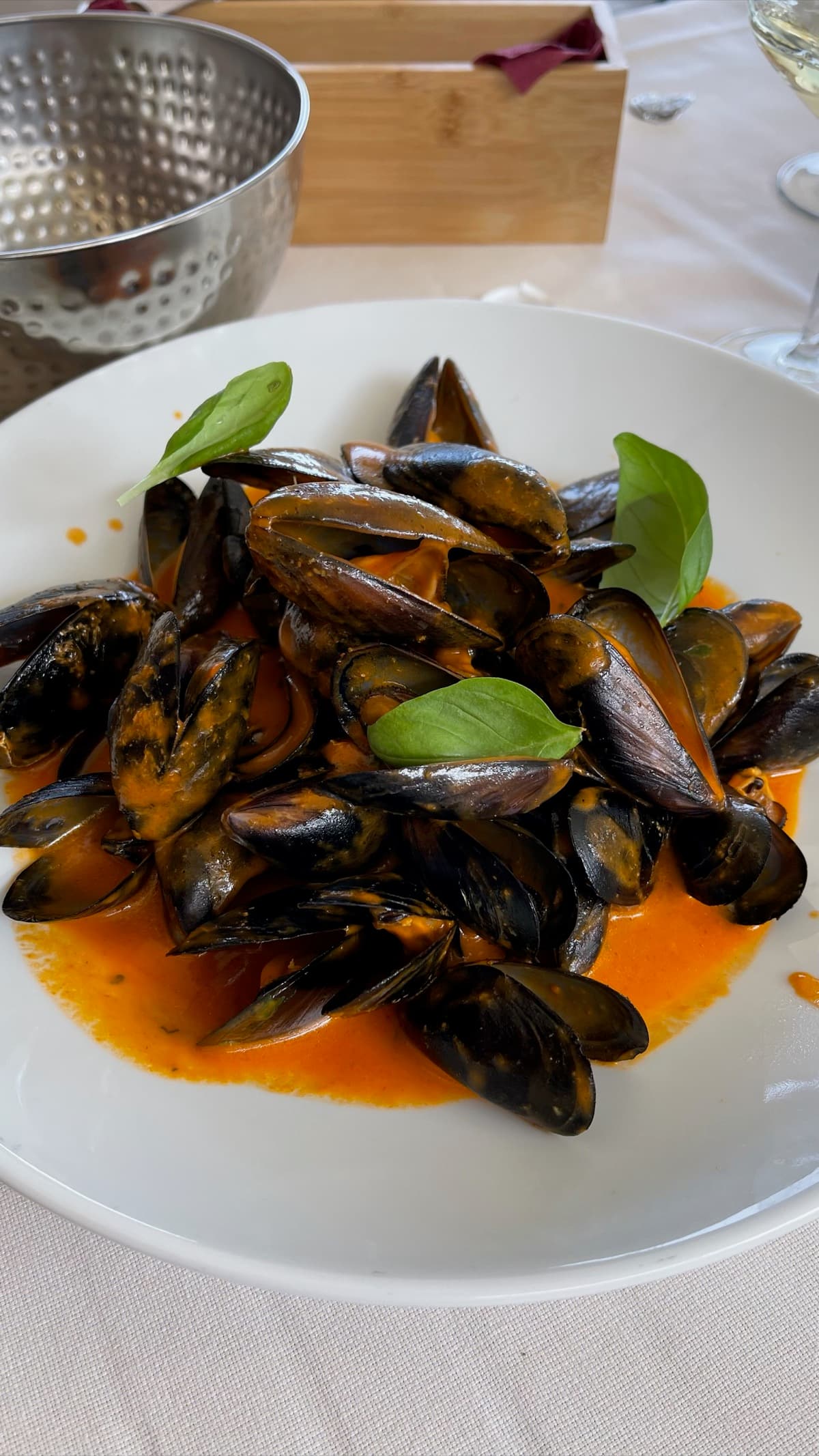
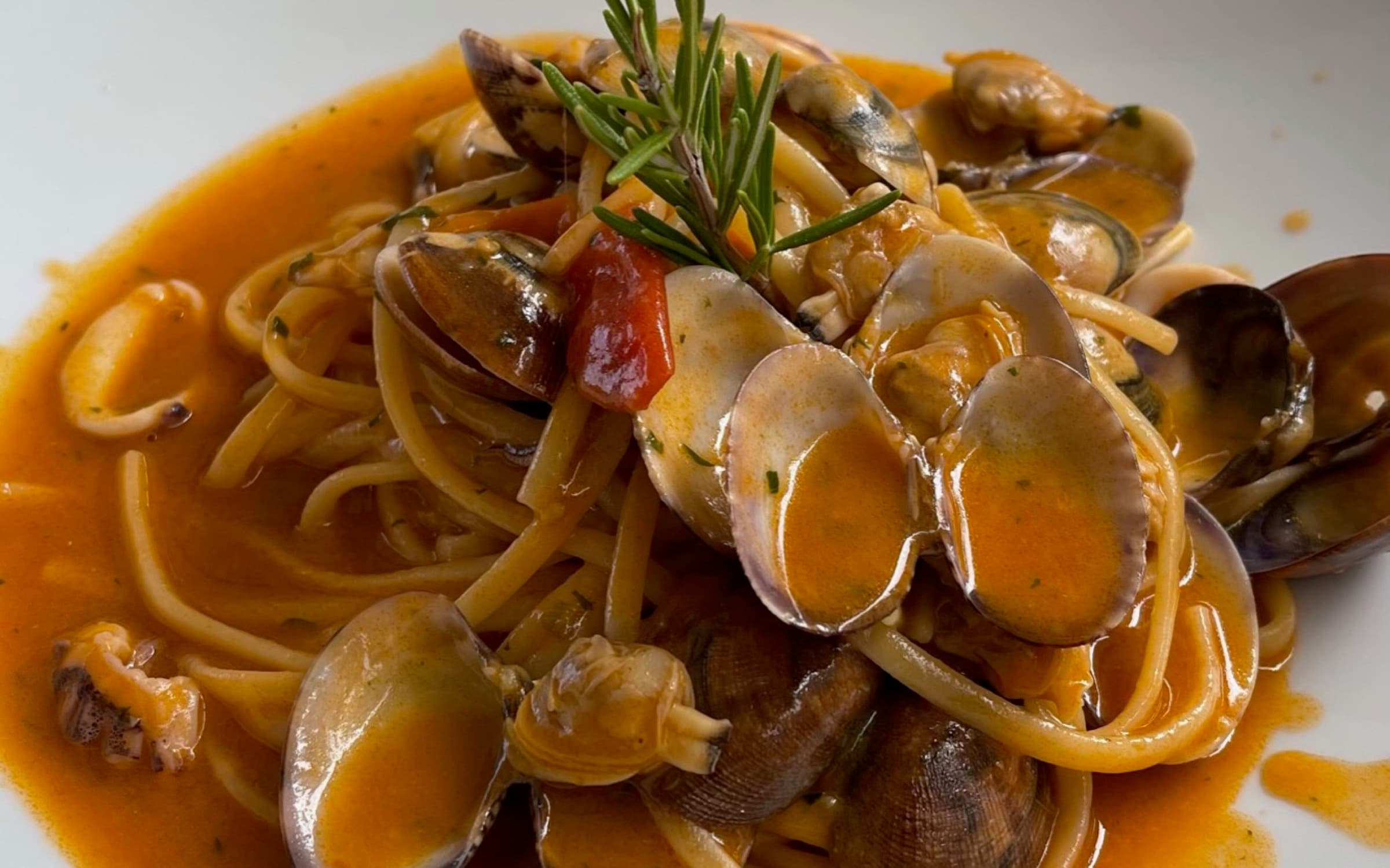
Albenga has its own port, and fresh fish truly arrives here every morning. There are several restaurants specializing in seafood, and they’re worth at least one dinner during your stay.
Ristorante Babette is our top pick for seafood. It’s located on the beachfront in front of Gallinara Island—not in the historic center, but in a setting that alone makes the evening worthwhile. For over twenty years, it has offered modern Ligurian seafood cuisine that highlights the garden as well as the sea: their “sea and garden in crispy batter” is a specialty worth the trip. Price range €€-€€€, elegant atmosphere, excellent for a sunset dinner. From the historic center, it’s just a few minutes by car or a pleasant walk.
Osteria del Mare is the other spot we wholeheartedly recommend for seafood in Albenga. Authentic seafood cuisine, fresh ingredients, and a welcoming atmosphere. Along with Babette, these are the two places we send our guests when they ask, “Where should we eat seafood tonight?”
Il Pernambucco (Viale Italia 35) is another well-established name in town. Open since 2000, it’s featured in the Michelin Guide and is part of the Ristoranti del Buon Ricordo network. The cuisine showcases local seafood with care and attention to presentation. There’s a lovely outdoor seating area with a garden for summer dinners. Price range: €€-€€€, reservations recommended. It’s about a ten-minute walk from the historic center.
Our tip: order fish for dinner, not for lunch. In Albenga, lunch is usually lighter (focaccia, farinata, a pasta dish), while dinner is when fish is treated with the attention it deserves. The only exception: Sunday lunch by the sea, a time-honored tradition.
4. Pizzerias and Focaccia Shops
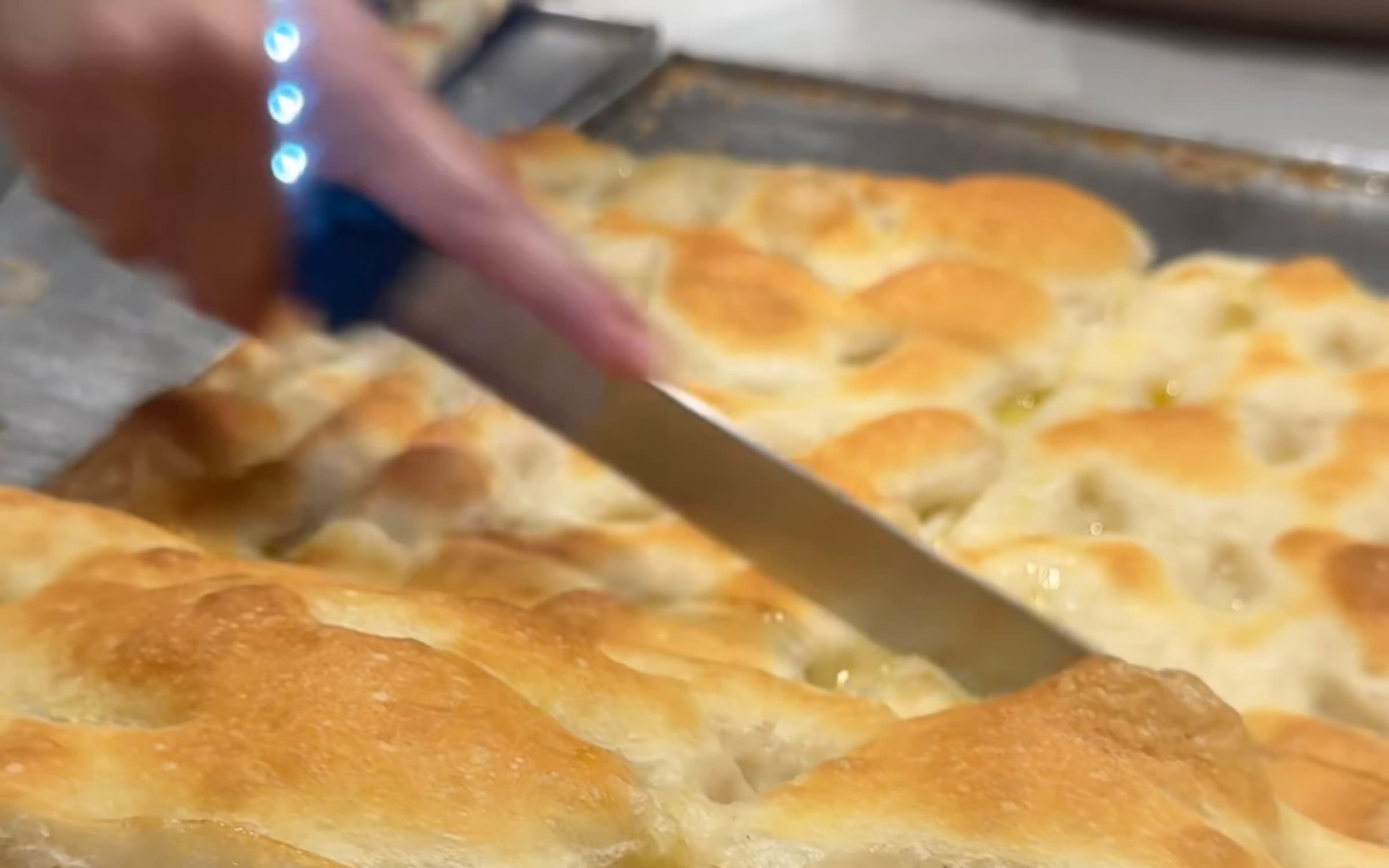
Ligurian focaccia (called "fügassa" in the local dialect) is about two centimeters thick, soft on the inside, golden on top, with characteristic dimples filled with extra-virgin olive oil and coarse salt. It’s eaten for breakfast, as a snack, for lunch on the beach, as an appetizer, or at midnight after a drink. It’s the most democratic food in Italy.
Zio Pagnotta, located in the heart of the historic center, is the bakery we recommend for focaccia. The shop has been recognized by Gambero Rosso as one of the best focaccia bakeries in western Liguria and holds the title of Master Artisan. In addition to the classic olive oil version, they offer seasonal variations (with zucchini flowers and anchovies, with gorgonzola and radicchio, with cherry tomatoes, olives, and anchovies) that are well worth trying. It’s just a short walk from the LargoDoria apartments: easily reachable in a few minutes for a hot focaccia breakfast.
For pizza, Albenga offers three distinct styles, and all three are worth a visit:
- Limone Rosso: contemporary Neapolitan pizza, long-risen dough, select ingredients. If you love Neapolitan-style pizza with a thick crust and stretchy mozzarella, this is the place to go.
- Mini: Roman-style pizza, crispy and thin, classic cut. For those who prefer the Roman style over the Neapolitan, there’s no alternative.
- Franco: traditional “just around the corner” pizza—the classic neighborhood pizza done right, unpretentious but consistently good. It’s the place to go when you’re craving an honest Margherita and want to walk home in three minutes.
All three are in the center or just a short walk from the apartments.
5. Creative Cuisine and Fine Dining
Albenga has no Michelin-starred restaurants in the city (the guide lists several local restaurants but has not awarded any stars at the time of writing), but it does have a few spots where the cuisine is more refined and the chef enjoys playing with tradition.
Ristorante Sunny, just a short walk from Palazzo Oddo, is a small spot with a talented young chef who serves local, seasonal cuisine with creativity and grace. It’s the place to go if you’re looking for something more creative without leaving the historic center, and if you like small restaurants where the chef steps out of the kitchen to chat with the guests. Price range €€-€€€, reservations recommended, especially on weekends.
Hostaria del Viale is another spot worth mentioning for those seeking refined cuisine and a well-curated menu. With a pleasant atmosphere and attention to detail, it’s a good choice for a slightly more sophisticated dinner without leaving Albenga.
Il Pernambucco (already mentioned for its seafood) also falls into this category when you want to treat yourself to a more special dinner: the care taken with the ingredients and the presentation of the dishes make it a great choice for special occasions as well.
When is it worth spending a little more? In our opinion: for an anniversary, for a romantic dinner for two upon your arrival or the night before your departure, or simply when you’re in the mood for more attentive service and a more extensive wine list. For all other meals, Albenga shines in the trattoria style.
6. Aperitifs and Cocktails: The Right Spots
The aperitif in Albenga is a serious matter, but in a good way: it’s a ritual of slowing down. You head down to the square around 6:30 p.m., the sun begins to cast its glow on the medieval towers, the air smells of the sea and laundry hanging out to dry, and you sit down with something refreshing.
Our simple rule: choose a local white wine. A glass of Pigato DOC or Vermentino della Riviera Ligure di Ponente costs just a few euros, is produced less than twenty kilometers from where you’re sitting, and is the perfect pairing for the weather, the food, and the view of the towers.
For aperitifs, we have three spots we recommend on a rotating basis:
- Eco: our favorite. An elegant spot with a huge selection of wines, including many natural wines—it’s hard to find such a carefully curated selection in a city of this size. Michele, the owner, is extremely friendly and knows how to recommend the perfect glass based on what you’re in the mood for. If you have to pick just one for an aperitif, choose this one.
- Signor G: a stylish atmosphere, the mini-pizza is very good, and if you like, you can stay for dinner right next door after your aperitif—convenient when you don’t feel like moving around.
- Scialla: as the name suggests, zero stress. The vibe is youthful, and on weekends there’s often live music inside—perfect for those looking for an aperitif with a bit of energy.
If you’re a fan of mixology and signature cocktails, the place to go is Twenties: serious bartending, well-crafted drinks, and an atmosphere that will make you forget you’re in a small provincial town. Ask for an Americano made with Piedmontese vermouth: Liguria has a vermouth tradition infused with local herbs that might surprise you.
For craft beers, head to Birriciccio: a curated selection, a passionate atmosphere, perfect for those who want a break from wine every now and then.
And if you’re looking for an evening with music and a lively vibe, Spuma is our recommendation: an audio bar with nightly events, music, and performances, where you can also dine—the food is solid and the atmosphere makes for a complete evening. It’s where Albenga shows its liveliest side after sunset.
7. Breakfast, Quick Lunch, and Ice Cream
Breakfast in Albenga is all about focaccia. Yes, you read that right: focaccia. Local tradition dictates that the “fügassa,” fresh out of the oven, is dipped in cappuccino for breakfast, and it’s one of the best things you can do in the world. If that’s not your thing, there are still croissants, sfogliatelle, and pastries, but treat yourself to at least one morning of pure Ligurian tradition.
Duo Bar is literally right across from our apartments—step out the door, cross the street, and you’re seated. Great coffee, a quick breakfast, the place you’ll find yourself at every morning out of habit before you even realize it. It’s our “home bar,” and we recommend it without reservation.
If you’re in the mood for viennoiserie (croissants, pain au chocolat, proper brioches), head to Brød: a bakery inspired by Nordic and French traditions, high quality, perfect for a special breakfast or to take home something sweet in the afternoon.
For a quick lunch at the beach, the standard formula is: stop by a bakery (we always recommend Zio Pagnotta), grab a slice of focaccia with olive oil or a farinata to go if you can find it, add a slice of focaccia with onions or cheese, a bottle of water, and you’re all set. It’s the classic lunch for Ligurians on a beach vacation.
For ice cream, our two spots are both on the promenade: Casa del Gelato and Festival des Glaces. Artisanal ice cream made with fresh ingredients. As always, ask for seasonal flavors: in spring, look for strawberry; in summer, local fruit flavors (peach, apricot); in fall, chestnut and hazelnut.
And if you’re in the mood for Asian cuisine—because after a week of pesto and focaccia, it can happen—La Pagoda is a good option for a different kind of dinner without leaving Albenga.
8. Pigato DOC Wineries and Tastings
Heading out of the historic center for a half-day dedicated to wine is one of the experiences we recommend most enthusiastically. The hills behind Albenga, crossed by the Val d’Arroscia, are one of the best-suited areas for Pigato della Riviera Ligure di Ponente DOC, a fresh, mineral, citrusy white wine that smells of peach, apricot, and Mediterranean scrub. In ten to fifteen minutes by car, you’ll find yourself in a landscape quite different from the seaside: olive groves, vineyards, and small villages.
Tenuta Colombera: the jewel among the vineyards
If we had to pick just one place to experience wine in Albenga, this would be it. The Tenuta Colombera is a Renaissance villa dating back to 1565, originally owned by the monks of Gallinara Island, then by the Marquises Ferrero of Ventimiglia, and now brought back to life by the Deperi family. It is located in a small, sunny valley between Albenga and Alassio, overlooking the Roman Via Iulia Augusta, with a breathtaking view of Gallinara—framed by a large wrought-iron circle that has become the symbol of the place.
The estate spans 5 hectares of vineyards (Vermentino and Granaccia), olive groves, orchards, and a forest with truffle grounds. The wine is produced using what grows right there, in the adjacent vineyards: Vermentino La Colombera is the house selection, by Cantina Deperi. In addition to wine tastings, there is a restaurant (chef Andrea Masala works with local and seasonal ingredients), a wine bar with a selection ranging from Deperi wines to champagnes, a lounge, and a shop. For truly special occasions, the estate even has a helicopter pad—yes, you can land by helicopter among the vineyards.
The atmosphere is elegant yet unpretentious: “full immersion in nature” is the concept, not ostentatious luxury. It opens in the late afternoon (wine bar at 5 PM, restaurant at 7 PM) and is perfect for an aperitif at sunset among the vineyards with a sea view, followed by a dinner that wraps up the day in the best possible way. Make a reservation.
The historic wineries of the inland region
There are three renowned production hubs:
Salea (a hamlet of Albenga, a few kilometers from the center): here you’ll find historic wineries such as Cantine Calleri and Vecchia Cantina, both specializing in Pigato, Vermentino, Rossese, and Ormeasco. They’re less than a ten-minute drive from LargoDoria.
Bastia (also in the Albenga area): the BioVio Organic Winery is located in the town’s historic center and produces organic Pigato, Vermentino, Rossese, and Granaccia. Not far away is the Enrico Dario Winery, another high-quality family-run operation.
Ranzo (a bit further inland, toward the Val d’Arroscia): this is perhaps the “high” heart of Pigato. Here, Bruna, A Maccia (a business dating back to 1850), and the Deperi family produce wine; the Deperi have been making wine for over two hundred years, maintaining their historical identity through sustainable innovations.
How to book a visit: the rule is simple—write or call a couple of days in advance. Ligurian wineries are mostly small family-run operations; they don’t have staff dedicated to wine tourism like in Tuscany or Piedmont, but that’s precisely why the experience is more authentic: the owner welcomes you, takes you among the barrels, and lets you taste four or five wines with some olive oil and a few slices of focaccia. Remember that they close for lunch (a family meal), so it’s best to schedule your visit mid-morning or late afternoon.
Albenga’s violet asparagus in season: if you’re here between late March and late June, ask at every restaurant if they have DOP violet asparagus (it’s a Slow Food Presidium). It is a unique asparagus found nowhere else in the world, with forty chromosomes instead of the usual twenty, featuring an intense purple color that fades to white toward the base; it is sweet, not very fibrous, and has a delicate flavor. It is harvested only by hand and only during this season. It is prepared in countless ways: with poached eggs, in tagliatelle, in risotto, or au gratin with Parmesan. It is the ingredient that, more than any other, will tell you exactly where you are.
9. Albenga’s Saturday Market (and more)
A useful note: in Albenga, the main weekly market isn’t on Saturday but on Wednesday morning. It’s held on Via Dalmazia from 8 a.m. to 1 p.m., and it’s not a market selling typical local products for tourists—it’s Albenga’s real market: vegetables, fruit, fish, cheese, cured meats, but also clothes, shoes, plants, and household goods. If you want to see the locals doing their shopping, this is the place.
But there’s something even more interesting: the Farmers’ Market in Piazza del Popolo, open Monday through Saturday from 7 a.m. to 1 p.m.. It’s the farmers from the Albenga Plain who sell their vegetables, produce, and flowers directly. This is where you’ll find the freshest produce possible: Albenga tomatoes (another local specialty), trombetta zucchini, green beans, purple asparagus in season, and fresh herbs. You can browse it in ten minutes, pay in cash, and the prices are fair.
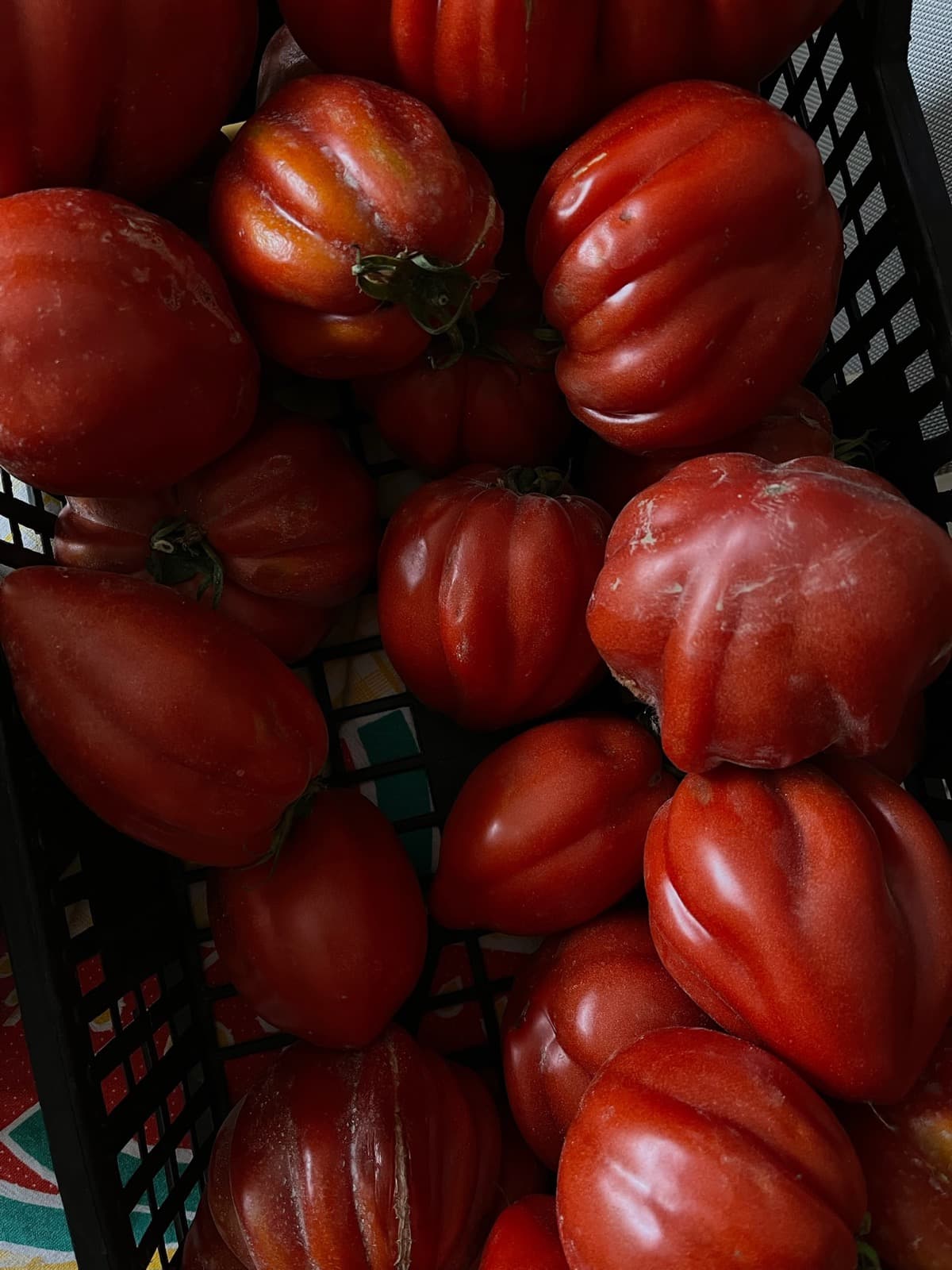
What to buy for cooking in your apartment: a bunch of basil to make pesto, a couple of Albenga tomatoes to eat raw with a drizzle of oil and coarse salt, a trombetta zucchini for an omelet, some purple asparagus if it’s in season, a jar of Taggiasca olives in brine, and a bottle of Pigato from a nearby producer. With these basic ingredients and half an hour of work, you’ll have an authentic Ligurian dinner.
At the Wednesday market, you’ll also find fish stalls with the night’s local catch: anchovies, sardines, mackerel, mullet, and bluefish. If you’re feeling adventurous, buy some and grill them in your apartment.
10. Eating at home: making the most of LargoDoria’s kitchen
Here lies one of the lesser-known secrets of vacation rentals: the chance to shop like a local and dine at home, in complete peace, after a day of sunshine and walking. Both of our apartments (ViaArchivolto and ViaGenova) have fully equipped kitchens: stovetops, oven, refrigerator, dishes—everything you need to prepare a decent meal without having to turn into a chef.
Here’s our go-to routine for a “stay-in” evening in Albenga:
- Morning: Stop by the Farmers’ Market in Piazza del Popolo for fresh vegetables and a few tomatoes. Swing by Zio Pagnotta for a slice of warm focaccia.
- Afternoon: Pop into a winery in the hills of Salea, Bastia, or Ranzo for a bottle of Pigato DOC straight from the producer.
- Back at the apartment: slowly prepare a simple Ligurian meal—for example, trofie with pesto (you can find ready-made pesto from local producers or make your own in a mortar), a tomato salad with Taggiasca olive oil and basil, and a slice of focaccia on the side.
- Evening: dinner in your pajamas, window open onto the medieval alleys, Pigato in your glass, no rush.
It’s one of the most relaxing experiences you can treat yourself to during a stay here, and we guarantee that after two dinners out—no matter how lovely—there always comes a moment when you just want to eat like this. No waiters, no noise, no menu to choose from. Just you and a simple dish made with ingredients you’ve seen firsthand.
If you’re traveling with a group or family, the benefit of having two or three “home-cooked” dinners over the course of a week-long vacation is tangible. And the joy of reminiscing about your Ligurian vacation even as you look at the empty fridge you’ve filled yourself with products bought directly from local farmers is something photos simply can’t capture.
Conclusion: Our Typical Week
If we were to sketch out an ideal gastronomic week in Albenga, it would look something like this:
Monday: breakfast at Duo Bar (it’s right across the street—you won’t be able to resist), farinata at Da Puppo for lunch, dinner at Candidato for your first true Ligurian evening.
Tuesday: croissant at Brød, lunch by the sea with focaccia from Zio Pagnotta, aperitif at Signor G, pizza from Limone Rosso in the evening.
Wednesday: Shopping at the Farmers' Market in Piazza del Popolo (it's the big market day), dinner at home in the apartment with trofie pasta with pesto and Pigato wine bought at the winery the day before.
Thursday: ice cream at the Festival des Glaces after the beach, cocktails at Twenties, seafood dinner at Pernambucco or Osteria dei Leoni.
Friday: trip to Alassio, lunch at Matetti (you made a reservation, right?), evening at Spuma for music and drinks.
Saturday: free morning, afternoon beers at Birriciccio, impromptu dinner—wander the alleys and choose with your nose.
Sunday: breakfast with focaccia at Duo Bar, last ice cream at Casa del Gelato, departure with a heavy heart and an empty fridge.
Albenga isn’t a Michelin-guide-worthy culinary destination. It’s a culinary destination for everyday life: eating well every day, for a week, without ever repeating yourself, spending just the right amount, walking home because everything is in the historic center and the historic center is your neighborhood. Stop wherever your nose leads you, ask Patrizia for advice when you see her, and never skip breakfast with focaccia.
See you soon, and bon appétit.